
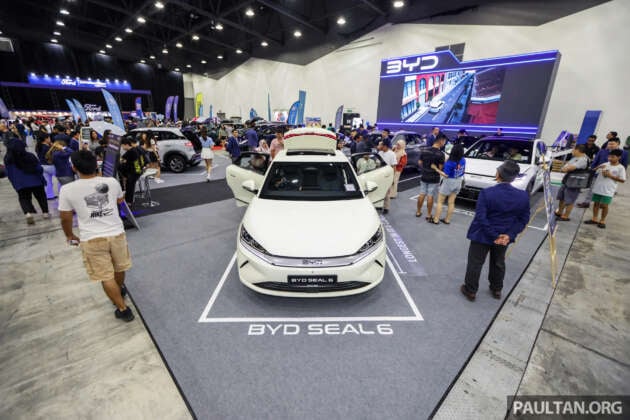


The exemption of import and excise duties for CBU fully-imported electric vehicles (EVs) has ended along with the year 2025, and with a new year comes a new tax structure for imported EVs.
At today’s annual Malaysian Automotive Association (MAA) 2025 review and 2026 outlook briefing, we sought clarification from the auto club on the new structure for CBU EVs, and they provided the numbers. Broadly, it’s 30% import duty + 10% excise duty + 10% sales tax (ST isn’t new and has been in place). However, the first number, import duty, is influenced by free trade agreements (FTAs) that Malaysia has with other countries or trading blocs.
MAA president Mohd Shamsor Mohd Zain and his council members gave an example of China, where most of our CBU EVs are shipped from. According to the tariff reduction schedule of the ASEAN-China Free Trade Agreement (ACFTA), EVs entering our region will face 5% import duty, so it’s 5%+10%+10% for CBU EVs from China, a big advantage over the standard 30%+10%+10%.
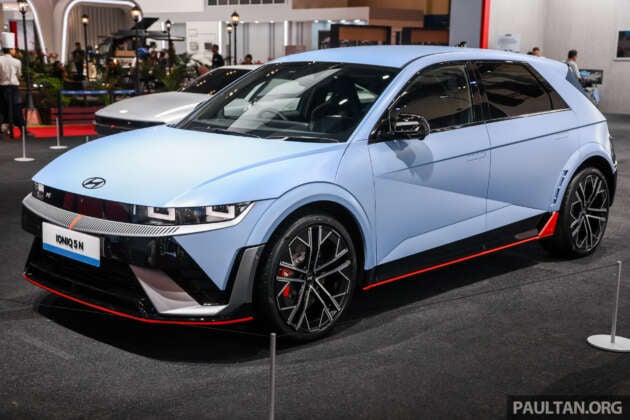
Not all FTAs are the same, and the one ASEAN has with China is in stark contrast with the FTA we have with South Korea. Cars are in the ‘highly sensitive’ list so import duty remains at 30% for CBU EVs from Hyundai and Kia. These ‘sensitive’ categories are erected to protect local industries from being overwhelmed by more cost competitive imports; however, it all boils down to the ‘give and take’ in negotiations. Clearly, China has scored a good one here.
Will import duty for Chinese CBU EVs fall further from the current 5%? Unlikely. The MAA council member specialising in trade pointed out that the next level of ASEAN-China cooperation mentions many things, but not tariff reduction – it’s low enough – and lower than other trading partners – as it stands.
So, how does this translate to retail prices? The majority of EVs currently sold in Malaysia hail from China (even our two Tesla models are from Gigafactory Shanghai), so the increase should be in the 15% ballpark, which isn’t that substantial. How so? Take a look at the discounts being offered in the market – a couple of brands have dished out rebates that are even larger in the ongoing EV price war.

So far, the only brand that has revealed 2026 prices for CBU EVs is Tesla, which said that it will maintain the RRP of 2025. It’s unknown if the EV specialist is absorbing the new duties or if it’s getting preferential treatment from the government via MITI’s BEV Global Leaders programme, of which Tesla is the only OEM in it. Since day one, Tesla has sold CBU cars without the otherwise mandatory franchise APs, for instance.
The ending of full duty exemption for CBU EVs is to encourage carmakers to set up shop in Malaysia, but it remains to be seen if 15% of duties is enough to force their hand, so to speak, especially when the current tax-free policy for CKD EVs only runs till end-2027, which is less than two years away.
Carmakers might just choose to either increase prices or absorb the difference (very likely) and just sit it out. Perhaps that’s where MITI’s new minimum floor price of RM250k for imported EVs comes in, but that’s a story for another day.
The post Tax and duties for CBU EVs set at 30%+10%+10% or 5%+10%+10% depending on country of origin, FTA appeared first on Paul Tan’s Automotive News.
